고려대학교 교수소개
Knowledge & Innovation

- 생명과학대학
- 생명공학부
- 구강모
소개

Prof. Kang-Mo Ku (구강모)
Tel: 02-3290-3063
E-mail: ku_km@korea.ac.kr
서울특별시 성북구 안암로 145, 고려대학교 생명과학관 서관 322호 (실험실), 서관 519호 (교수사무실)
- Lab News
- Curriculum Vitae
- Publication
- Research
- Teaching
- Crop Quality Physiology Lab
Lab News
고려대학교 작물품질생리학 연구실 석사, 박사과정 대학원생 모집 (2026 9월 입학)
-인턴연구원 이후 대학원 입학을 장려합니다.
혜택: 등록금/입학금 100% 지원; 3회/년 학회 참가; 분석교육 및 워크샵 지원; 논문게재 인센티브 등
[뉴스 및 행사]
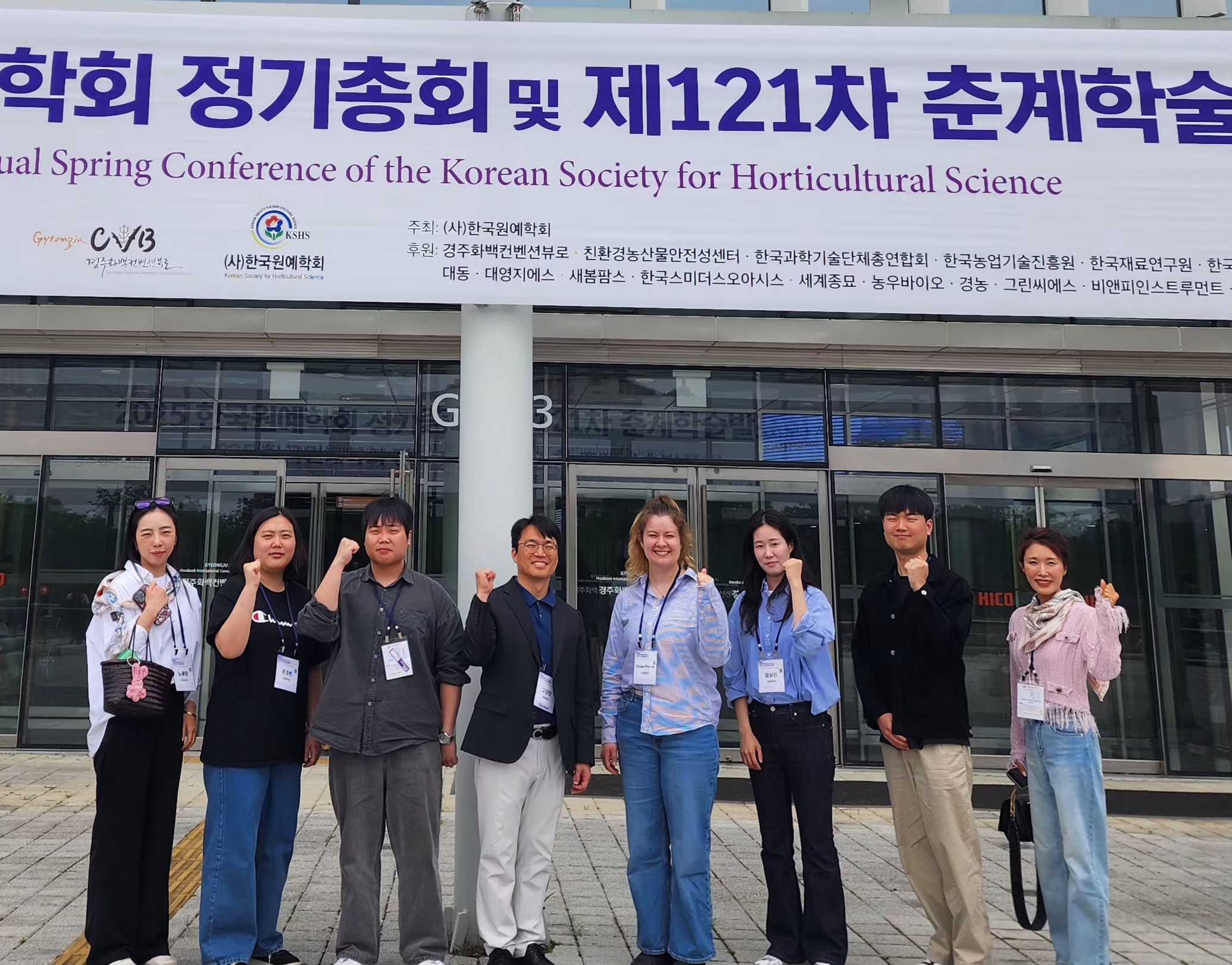
2025. 5.22 경주, 한국원예학회
구강모 교수가 기능성성분과 부위원장으로 선출
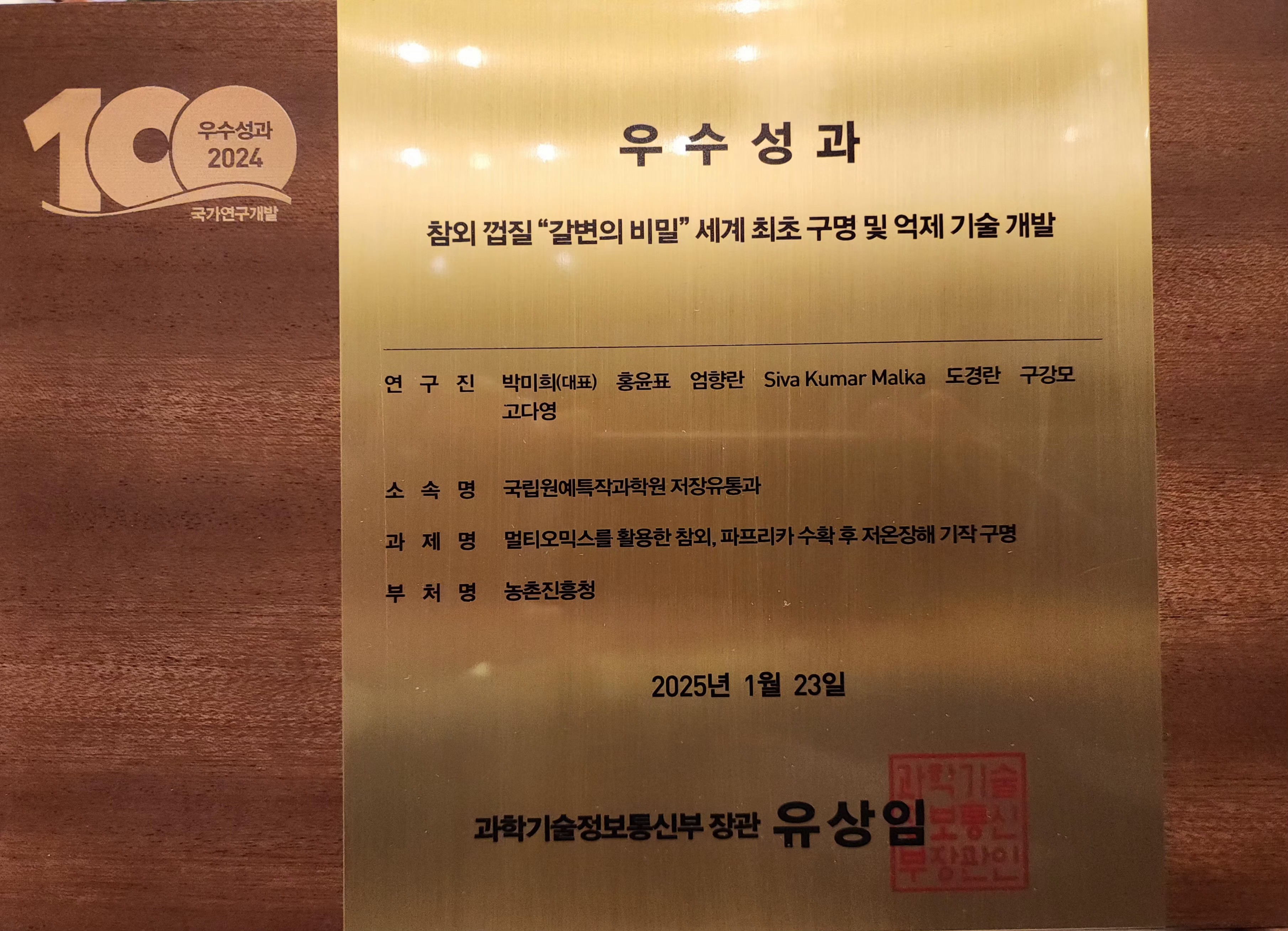
2025. 4.21 (구강모 교수) ‘2024년 국가연구개발 우수성과 100선’ 및 과기정통부 장관 유공 표창을 받았습니다.
2025. 4.4 13회 한국대사체학회 우수포스터상 (장유진) 축하합니다.
구강모 교수는 식물세션에서 좌장을 하며 "식물 VOCs의 수확후저장 유통에서의 활용"에 대한 초청발표를 하였습니다.

-학회시작전 우도에서 연구실 MT를 하며 좋은 시간을 보냈습니다.

25.2.25 지은구, 주우철 학생의 졸업을 축하합니다.
*주우철 학생의 우수논문상 (대학원장 수여) 축하합니다.
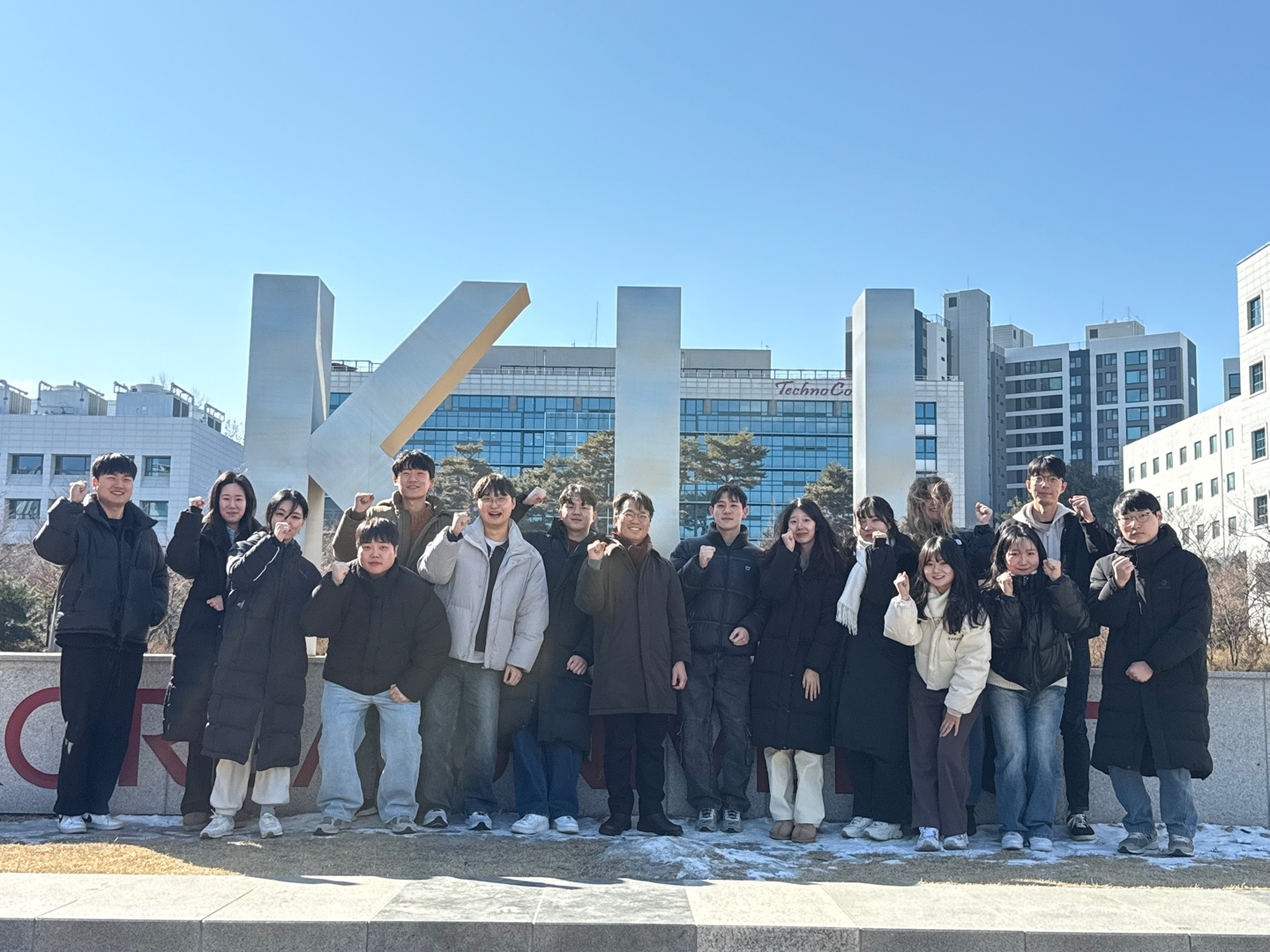
2025년 동계 학부인턴연구원 종료 기념 -
(이례적으로) 학부 인턴 연구생을 많이 받아 교육했습니다.
김민재, 김은빈, 김은진, 선재희, 이도윤, 이상훈, 이후연
김경민 (아주대), 김민선 (전남대)
2024년 연구개발 우수성과 100선 (25.1.23)
고다영 (석박사과정) 학생이 공동연구진으로 수상했습니다.
- 열수처리에 의한 참외의 갈변억제 효과를 상위 2% 저널인 Postharvest Biology and Technology 에 출판 (대표논문 기여)
2024년 한국대사체학회 우수포스터상 (주우철)
-참외의 CA 저장을 통한 저장 및 품질 향상: 대사변화 및 향기성분 프로파일-

2024년 동계 학부인턴연구원 종료 기념 - 원도경 (사진에없음), 정가빈, 박수빈

2023년 한국식품저장유통학회 우수포스터상 (주우철)
-김치대사체의 사계절 변이: 대사체학을 활용한 기계학습기반의 계절 판별-

2023년 하계 학부인턴연구원 종료 기념 - 권규혁, 김현재

2023년 춘계 원예학회 (대전) - Eloise Parent 상록상 수상 (학부 연구원)

2023년 춘계 원예학회 (대전)

2023년 구례 자연드림 연구자문 및 협의

2023년 장비유지보수 (지은구, 주우철)

2023년 겨울 연구실 내부 공사


2022년 크리스마스 기념 3개 랩 모임 (PIPL X CQPL X KUCEP)

2022년 동계 학부인턴연구원 활동 (TLC를 이용한 식물색소 분리 모습)

2022년 추계 원예학회 (제주) 참가 학부인턴연구원 (연구실 자체프로그램)

2022년 KIRD ImageJ 특강 (대전)

2017년 4회 국제 글루코시놀레이트 학회 (베를린, 독일)

뉴스 및 행사 (발표일정)
2025. 6.20 서울 종로3길 디타워 23층, 한국향료연구회 "배추과 작물의 글루코시놀레이트와 향미 생성 기작" 발표 예정
2025. 5.22 경주, 한국원예학회 유전육종 분과 "기후변화 대응 배추과 작물의 유전적 개량 및 육종 전략" 발표 예정
2025. 5.12 서울대, 식물미생물학과 "식물 VOC와바이오마크로서의 활용" 발표 예정
2025.5,27 브로콜리 박사 참외에 빠지다… "싱가포르로 600개 가져가 다 깎아봤죠"
한빛사 논문 (Machine learning for storage duration based on volatile organic compounds emitted from 'Jukhyang' and 'Merry Queen' strawberries during post-harvest storage)
https://www.ibric.org/bric/hanbitsa/treatise.do?mode=treatise-view&id=94861&authorId=46796#!/list
한빛사 논문 (Controlled atmosphere storage enhances Korean melon shelf life and quality: A comparative metabolic analysis with reefer container export)
https://www.ibric.org/bric/hanbitsa/treatise.do?mode=treatise-view&id=94858&authorId=46796#!/list
한빛사 논문 (Hot water treatment alleviates peel browning in oriental melons through cutin biosynthesis: A comprehensive metabolomics approach)
https://www.ibric.org/bric/hanbitsa/treatise.do?mode=treatise-view&id=94860&authorId=46796#!/list
Better broccoli, enhanced anti-cancer benefits with longer shelf life
https://www.sciencedaily.com/releases/2014/02/140210141900.htm
Cancer-fighting properties of horseradish revealed
https://www.sciencedaily.com/releases/2016/05/160517122054.htm
전남대 구강모 교수팀, 영농형태양광 하부 브로콜리 양배추 재배 적합
https://www.wikitree.co.kr/articles/765128
전남대 학부생 연구논문 국제학술지에 두 차례 실려
https://www.pressian.com/pages/articles/2021062818172345193
전남대 학부 졸업생 고다영씨, 사과 연구 논문 국제학술지에 실려
https://www.nongmin.com/news/NEWS/FLD/CNT/352305/view
Optimization of allyl isothiocyanate sanitizing concentration for inactivation of Salmonella Typhimurium on lettuce based on its phenotypic and metabolome changes
Agrivoltaics for broccoli, cabbage
https://www.pv-magazine.com/2022/06/23/agrivoltaics-for-broccoli-cabbage/
Curriculum Vitae
Education
2009 – 2013 Ph.D. Department of Crop Sciences, University of Illinois Urbana-Champaign, USA1
2006 – 2008 M.S. Department of Horticulture, Kyungpook National University, Korea2
2000 – 2006 B.S. Department of Agronomy, Kyungpook National University, Korea3
Dissertation and Thesis
1 "Enhancing human health promoting activity through the regulation of the methyl jasmonate mediated glucosinolate biosynthesis in Brassica oleracea " PHD Dissertation
2 "Chemoprevention of pepper leaves and its functional constituents" MS Thesis
3 "Chemoprevention activity of newly bred soybean ‘Agakong’" BA Thesis
Professional Experiences
2022.09 – Current Associate Professor, Division of Biotechnology/Department of Plant Biotechnology, Korea University
2021.03 – 2022.08 Associate Professor, Department of Horticulture, Chonnam National University
2019.03 – 2021.02 Assistant Professor, Department of Horticulture, Chonnam National University
2015.07 – 2019.02 Assistant Professor, Division of Plant and Soil Sciences, West Virginia University
2013.08 – 2015.07 Postdoctoral Research Associate, University of Illinois Urbana-Champaign, USA
2008.08 – 2009.07 Research Associate, Konkuk University, Korea
-
Academic Activities
Associate Editor, Frontiers in Plant Sciences (2023-present)
Chair of the Academic Committee at the Korean Metabolomics Society (2023-present)
Associate Editor, Horticulture, Environment, and Biotechnology (2023-present)
Associate Editor, Korean Journal of Plant Resources (2020-present)
Advisory committee, Korea Society for Bio-Environmental Control (2022)
Advisory committee, Korea Society of Horticulture Science (2019-present)
-
Awards
2014 Best Graduate Research, ACES Award (University of Iliinois at Urbana-Champaign)
2021 Excellence in New Faculty Award (Chonnam National University)
2024 Best Section Editor Award (The Korean Society of Horticultural Science)
-
Publication
Publications (Google Scholar)
[ Papers from Korea University ]
[2025]
98. EH Kwon et al., Journal of Pineal Research. Microbial Melatonin Production improves plant metabolic function in short-term climate-induced stresses. 2025. accepted. (JCR 10%)
97. Reddy, U. K., Karnatam, K. S., Talavera-Caro, A., Lopez-Ortiz, C., Ku, K.-M., et al. (2025). Uncovering the genetic architecture of pungency, carotenoids, and flavor in Capsicum chinense via TWAS–mGWAS integration and spatial transcriptomics. Horticulture Research, uhaf243. (JCR 10%)
96. Ko, T.-Y., Lee, S.-H., Roh, Y.-H., Lee, J. G., Yang, H., Chang, M.-S., Lee, J.-H., & Ku, K.-M. (2025). Field validation of OTR-modified atmosphere packaging under controlled atmosphere storage for Korean melon export to Vietnam. Horticulturae, 11(11), 1295. https://doi.org/10.3390/horticulturae11111295
95. Lee, H., Ko, E. K., Park, J., Jang, Y. J., Ku, K.-M., Xiong, L., & Lee, H. (2025). ARABIDOPSIS NITRATE REGULATED 1 negatively regulates the tolerance of salt stress by controlling ion homeostasis and GA metabolism. Journal of Plant Physiology, 154608.
94. Eum, H. L., Lee, J.-H., Lee, J.-G., Chang, M.-S., Do, K.-R., Yang, H., Ku, K.-M., & Kim, D.-S. (2025). Impact of harvest maturity and controlled atmosphere on strawberry quality under simulated export conditions. Foods, 14(17), 2959.
93. S Palma-Salgado, KM Ku, JA Juvik, E Araud, TH Nguyen, H Feng Attachment and removal of porcine rotavirus (PRV) and Tulane virus (TV) on fresh and artificial phylloplanes of Romaine lettuce and Carmel spinach as affected by … 2025 International Journal of Food Microbiology 429, 111020
92. , J-H Lee, , , E Jee, , , , K-M Ku.Controlled atmosphere storage enhances Korean melon shelf life and quality: A comparative metabolic analysis with reefer container export, 2024, Postharvest Biology and Technology 219, 112808 (JCR 2%)[2024]
91. Changes in biochemical metabolites and growth of garlic by evapotranspiration-based irrigation regime. Annals of Agricultureal Sciences. 2024.
90. YJ Jang, DY Ko, JA Ryu, MG Kang, JS Han, KM Ku Quality Evaluation and Shipping Export Potential of ‘Eliteggul’ Korean Melon (Cucumis melo var. makuwa) to Singapore Using MAP Technology. 2024 Horticulturae 10 (12), 1354
89. JE Baek, K-M Ku. Perception of Horticultural Therapy for Job Stress among Various Hospital Workers, 2024, Journal of Agriculture & Life Science
88. S Bae, YJ Choi, SE Park, EJ Kim, MJ Lee, YB Chung, SH Park, SG Min, K-M Ku, HY Seo, HS Son. Effects of seasonal harvest of kimchi cabbage on microbial and metabolic profiles of kimchi, 2024, Food Research International
87. E Do, E Jee, CS Gil, S Kim, SY Lee, K-M Ku. Strawberry Volatile Organic Compounds for Targeted Metabolomics: The AMDIS Strawberry User Library from Korean Germplasm, Horticulturae
86. DY Ko, SM Seo, YH Lee, CS Gil, H Lee, K-M Ku. Turning glucosinolate into allelopathic fate: investigating allyl isothiocyanate variability and nitrile formation in eco-friendly Brassica juncea from South Korea, 2024, Scientific reports
85. WC JU, SJ Park, MJ Lee, SH Park, SG Min, K-M Ku. Seasonal variation of metabolites in Kimchi cabbage: utilizing metabolomics based machine learning for cultivation season and taste discrimination, 2024, Horticulture, Environment, and Biotechnology,
84. E Jee, E Do, CS Gil, S Kim, SY Lee, S lee, K-M Ku. Analysis of volatile organic compounds in Korean-bred strawberries: insights for improving fruit flavor, 2024, Frontiers in Plant Sciences, 10.3389/fpls.2024.1360050
83. E Do, M Kim, DY Ko, M Lee, C Lee, K-M Ku. Machine learning for storage duration based on volatile organic compounds emitted from'Jukhyang'and'Merry Queen'strawberries during post-harvest storage
2024. Postharvest Biology and Technology 211, 112808 (JCR 2%)82. SH Chae, SG Min, HW Moon, YB Jung, SH Park, HY Seo, K-M Ku. Kimchi cabbage (Brassica rapa subsp. pekinensis [Lour.]) Metabolic changes during growing seasons in the Republic of Korea
2024, Horticulture, Environment, and Biotechnology81. MJ Park, D Ryu, J Cho, K-M Ku, Y-H Kang. Anti-Inflammatory Flavonoids from Agrimonia pilosa Ledeb: Focusing on Activity-Guided Isolation, 2024, Molecules
80. Y-J Choi, J-Y Lim, D-Y Ko, K-M Ku, MJ Lee, SJ Park, J-H Yang, YB Chung, S-H Park, SG Min, M-A Lee, Effects of Pretreated Garlic on Bacterial Composition and Metabolite Profiles During Kimchi Fermentation, 2024, LWT
[2023]
79. M-H Park, K-M Ku, K-R Do, HL Eum, JH Cho, PH Park, SK Malka. Carbon dioxide treatment modulates phosphatidic acid signaling and stress response to improve chilling tolerance and postharvest quality in paprika. Frontiers in Plant Science. 2023, 14. doi: 10.3389/fpls.2023.1287997
78. D-Y Ko, S-H Chae,H-W Moon, HJ Kim, J Seng, M-S Lee, K-M Ku, Agrivoltaic Farming Insights: A Case Study on the Cultivation and Quality of Kimchi Cabbage and Garlic. 2023. 13. 10. 10.3390/agronomy13102625
77. M-H Park, DY Ko, KR Do, H-W Moon, KM Ku. Hot water treatment alleviates peel browning in oriental melons through cutin biosynthesis: a comprehensive metabolomics approach, Postharvest Biology and Technology, 2023, 204, 112451. (JCR 2%)
76. A Rose, Y-C Chiu, C Showman, KM Ku, J Jaczynski, K Matak. Characterization of protein concentrates obtained by defatting cricket, locust, and silkworm powders using one-step organic solvent extraction, LWT, 2023, 182, 1
75. S Palma-Salgado, KM Ku, JA Juvik, TH Nguyen, H Feng. Artificial phylloplanes resembling physicochemical characteristics of selected fresh produce and their potential use in bacterial attachment/removal studies, Food Control, 2023, 149, 109730.
74. HW Moon, KM Ku. The effect of additional shading utilizing agriphotovoltaic structures on the visual qualities and metabolites of broccoli, Frontiers in Plant Science, 2023, 14, 1111069 (JCR 10%)
73. DS Park, SY Park, K-H Liu, KM Ku. Optimal allyl isothiocyanate concentration on Botrytis cinerea during the postharvest storage of blackberries and mechanism of blackberry color changes at high concentration of allyl isothiocyanate, Postharvest Biology and Technology, 2023, 199, 112292 (JCR 5%)
[Papers from Chonnam National Univeristy]
72. K Zaikova, J Jeong, KR Geem, KM Ku. JS Kim, DW Lee. In planta production and characterization of full-length human adipose triglyceride lipase, Plant Biotechnology Reports, 2022, 16, 793-797.
71. GY Lee, MH Park, KM Ku. Metabolomic Change of Oriental Melon and Its Skin Browning by Coconut Oil and Beeswax Coating Treatment During Room Temperature Storage. Journal of Agriculture & Life Science. 2022, 56(2), 107-115.
70. SH Chae, HJ Kim, HW Moon, YH Kim, KM Ku. Agrivoltaic Systems Enhance Farmers’ Profits through Broccoli Visual Quality and Electricity Production without Dramatic Changes in Yield, Antioxidant Capacity, and Glucosinolates. Agronomy. 2022, 12 (6), 1415
69. Moon HW, KM Ku. Impact of an Agriphotovoltaic System on Metabolites and the Sensorial Quality of Cabbage (Brassica oleracea var. capitata) and Its High-Temperature-Extracted Juice. Foods. 2022, 11 (4), 498
68. Ko DY, Ku KM. Effect of Anti-Obesity and Antioxidant Activity through the Additional Consumption of Peel from ‘Fuji’Pre-Washed Apple. Foods, 2022.11 (4), 497
67. Chae SH, Lee O, Park HY, Ku KM. Seasonal Effects of Glucosinolate and Sugar Content Determine the Pungency of Small-Type (Altari) Radishes (Raphanus sativus L.) Plants. 2022, 11 (3), 312
66. Liu M, Seo HY, Min S, Ku KM. Phytonutrients and Metabolism Changes in Topped Radish Root and Its Detached Leaves during 1° C Cold Postharvest Storage. 2022
65. Simpson T, Ku KM. Metabolomics and Physiological Approach to Understand Allelopathic Effect of Horseradish Extract on Onion Root and Lettuce Seed as Model Organism. Plants. 2021, 10 (10), 1992
64. Soundararajan P, Park SG, Won SY, Moon MS, Park HW, Ku KM, Kim JS. Influence of Genotype on High Glucosinolate Synthesis Lines of Brassica rapa. International journal of molecular sciences. 2021, 22 (14), 7301
63. Song HJ, Ku KM. Optimization of allyl isothiocyanate sanitizing concentration for inactivation of Salmonella Typhimurium on lettuce based on its phenotypic and metabolome changes. Food Chemistry. 2021, 130438. (JCR 5%)
62. Chae SH, Lee YS, Kim JH, Han TH, Ku KM. Metabolite and Elastase Activity Changes in Beach Rose (Rosa rugosa) Fruit and Seeds at Various Stages of Ripeness. Plants. 2021, 10 (7) 1283
61 Song HJ, Kim MH, Ku KM. A Double-Edged Sword of Surfactant Effect on Hydrophobic Surface Broccoli Leaf as a Model Plant: Promotion of Pathogenic Microbial Contamination and Improvement to Disinfection Efficiency of Ozonated Water. Processes. 2021, 9(4) 679
60. Park MH, Kim SJ, Lee JS, Hong YP, Chae S-H, Ku KM. Carbon Dioxide Pretreatment and Cold Storage Synergistically Delay Tomato Ripening through Transcriptional Change in Ethylene-Related Genes and Respiration-Related Metabolism. Foods. 2021, 10(4) 744
59. Kim S, Kim S, Kiniry JR, Ku KM. A hybrid decision tool for optimizing broccoli production in a changing climate. Horticulture, Environment, and Biotechnology. 2021, 1-14
58. Crayton SM, Wood PB, Brown DJ, Millikin AR, McManus TJ, Simpson TJ, Ku KM, Yong-Lak Park. Bioaccumulation of the pesticide imidacloprid in stream organisms and sublethal effects on salamanders. Global Ecology and Conservation 2020, 23 e01292
57. Barickman TC, Ku KM*, Sams CE. Differing Precision Irrigation Thresholds for Kale (Brassica oleracea L. var. acephala) Induces Changes in Physiological Performance, Metabolites, and Yield. Environmental and Experimental Botany. 2020, 104253 (JCR 10%)
56. Park MH, Chang EH, Yang HJ, Lee JS, Do GR, Song HJ, Chang MS, Ku KM. Modified Atmosphere and Humidity Film Reduces Browning Susceptibility of Oriental Melon Suture Tissue during Cold Storage. Foods. 2020, 9(9) 1329
55. Palma-Salgado S, Ku KM*, Dong M, Nguyen TH, Juvik JA, Feng H. Adhesion and removal of E. coli K12 as affected by leafy green produce epicuticular wax composition, surface roughness, produce and bacterial surface hydrophobicity, and sanitizers. International Journal of Food Microbiology. 2020, 108834
54. Chiu YC, Shen C, Farnham MW, Ku KM. Three-dimensional epicuticular wax on plant surface reduces attachment and survival rate of Salmonella during storage. Postharvest Biology and Technology 2020, 166, 111197 doi.org/10.1016/j.postharvbio.2020.111197 (JCR 5%)
53. Warren D, Soule L, Taylor K, Skinner RC, Ku KM, Matak K, Benedito VA, Tou JC. Protein quality and safety evaluation of sarcoplasmic protein derived from silver carp (Hypophthalmichthys molitrix) using a rat model. Journal of Food Science. 2020,
52. Chiu YC, Matak K, Ku KM. Methyl Jasmonate Treatment of Broccoli Enhanced Glucosinolate Concentration, Which Was Retained after Boiling, Steaming, or Microwaving. Foods. 2020,
51. Fuzawa M, Smith RL, Ku KM, Shisler JL, Feng H, Juvik JA, Nguyen TH. Roles of Vegetable Surface Properties and Sanitizer Type on Annual Disease Burden of Rotavirus Illness by Consumption of Rotavirus‐Contaminated Fresh Vegetables: A Quantitative Microbial Risk Assessment. Risk Analysis. 2020, doi.org/10.1111/risa.13426
50. Liu M, Wang L, Ku KM, Zhang L, Lei L, Zong W. Ultrasonic-assisted extraction and antioxidant activity of polysaccharide from Eucommia ulmoides leaf. Pakistan Journal of Pharmaceutical Sciences. 2020,
49. Ku KM, Development of Lab Curriculum for Teaching Role of Surfactant on Waxy Leaf Surface and Contact Angle Measurement Using Smartphone Application and Its Educational Efficacy Analysis. Trends in Agriculture & Life Sciences, Vol. 57, 2019. 12. https://doi.org/10.29335/tals.2019.57.1
48. Ku KM, Chiu YC, Shen C, Jenks M. Leaf cuticular waxes of lettuce are associated with reduced attachment of the foodborne pathogen Salmonella spp. at harvest and after postharvest storage. LWT 2019, DOI: 10.1016/j.lwt.2019.108657
47. Chiu YC, Matak K, Ku KM. Methyl jasmonate treated broccoli: impact on the production of glucosinolates and consumer preferences. Food Chemistry. 2019. 125099 (JCR 5%)
46. Han N, Ku KM, Kim J. Postharvest variation of major glucosinolate and their hydrolytic products in Brassicoraphanus ‘BB1’. Postharvest Biology and Technology. 2019. 15, 70-78 (JCR 5%)
45. Kim MJ, Lee MY, Shon JC, Kwon YS, Liu KH, Lee CH, Ku KM. Untargeted and targeted metabolomics analyses of blackberries-understanding postharvest red drupelet disorder. Food Chemistry. 2019. 125169 (JCR 5%)
[Papers from West Virginia University]
44. Simpson TJ, Chiu YC, Richards-Babb M, Blythe JM, and Ku KM. Demonstration of allelopathy of horseradish root extract on lettuce seed. Biochemistry and Molecular Biology Education. 2019, 43(3), 333-340.
43. Kim HJ, Ku KM, Choi S, Cardarelli M. Vegetal-derived biostimulant enhances adventitious rooting in cuttings of basil, tomato, and chrysanthemum via brassinosteroid-mediated processes. Agronomy. 2019, 9(2), 74.
42. Zhang L, Ku KM. Biomarkers-based classification between green teas and decaffeinated green teas using gas chromatography mass spectrometer coupled with in-tube extraction (ITEX). Food Chemistry. 2019. 271 450-456. https://doi.org/10.1016/j.foodchem.2018.07.137 (JCR 5%)
41. Pupo A, Ku KM, Gallagher JEG. Effects of MCHM on yeast metabolism. PloS one. 2019, 14 (10)
40. Skinner CR, Gigliotti JC, Ku KM, Tou JC. A comprehensive analysis of the composition, health benefits, and safety of apple pomace. Nutrition Review. 2018. 76 893-909. https://doi.org/10.1093/nutrit/nuy033 (JCR 10%)
39. Kim MJ, Simpson TJ, Chiu YC, Becker TM, Juvik JA, and Ku KM. Environmental and genetic variation in essential mineral nutrients and nutritional value among Brassica vegetables. Journal of Agricultural Science. 10 (7) 2018. https://doi.org/10.5539/jas.v10n7p1
38. Liu M, Zhang L, Suk Lan Ser, Cumming RJ, Ku KM, Comparative analysis of broccoli by-products for human nutrition: the potentials of broccoli by-product utilization. Molecules. 23(4), 900. 2018. doi:10.3390/molecules23040900
37. Chiu YC, Juvik JA, Ku KM. Targeted metabolomic and transcriptomic analyses of ‘Red Russian’ kale (Brassicae napus var. pabularia following methyl jasmonate treatment and larval infestation by the cabbage looper (Trichoplusia ni Hübner). International Journal of Molecular Science. 19, 1058. 2018. doi:10.3390/ijms19041058
36. Zucoloto M, Ku KM*, Kim MJ, Kushad, MM. Influence of 1-methylcyclopropene treatment on postharvest quality of scab (Venturia inaequalis) resistant apple cultivars. Journal of Food Quality. 2017. Article ID 5951041, 12 pages, https://doi.org/10.1155/2017/5951041 [Link]
35. Frazie MD, Kim MJ, Ku KM. Health-promoting phytochemicals from 11 mustard cultivars at baby leaf and mature stages. Molecules, 22(10), 1749, 2017. doi:10.3390/molecules22101749 [Link]
34. Kim MJ, Chiu YC, and Ku KM. Glucosinolates, carotenoids, and vitamins E and K variation from selected kale and collard cultivars. Journal of Food Quality. 2017 Article ID 5123572, 8 pages, https://doi.org/10.1155/2017/5123572 [Link]
33. Sim I, Suh DH, Do SG, Moon KH, Lee JH, Ku KM, Lee CH. Unraveling Metabolic Variation for Blueberry and Chokeberry Cultivars Harvested from Different Geo-Climatic Regions in Korea. Journal of Agricultural Food Chemistry. 65 (41), pp 9031–9040. 2017. DOI: 10.1021/acs.jafc.7b04065 [Link] (JCR 10%)
32. Lee YS, Ku KM*, Becker T, Juvik JA. Chemopreventive glucosinolate accumulation in various broccoli and collard tissues: microfluidic-based targeted transcriptomics for by-product valorization. PLoS One. 12(9): e0185112, 2017. https://doi.org/10.1371/journal.pone.0185112 [Link]
31. Kim MJ, Chiu YC, Kim NK, Park HM, Lee CH, Juvik JA, and Ku KM. Cultivar specific changes in primary and secondary metabolites in pak choi (Brassica rapa, Chinensis. Group) by methyl jasmonate. International Journal of International Molecular Sciences. 18(5), 1004, 2017. doi:10.3390/ijms18051004 [Link]
30. Chiu YC, Jenks MA, Richards-Babb M, Ratcliff BB, Juvik JA, Ku KM. Demonstrating the effect of surfactant on water retention of waxy leaf surfaces. Journal of Chemical Education. 2017. doi: 10.1021/acs.jchemed.6b00546. [Link] [Tutorial Video]
29. Ku KM, Kim MJ, Jeffery EH, Kang Y-H, Juvik JA. Profiles of glucosinolates and their hydrolysis products, and quinone reductase inducing activity from 39 arugula (Eruca sativa Mill.) Accessions. Journal of Agricultural Food Chemistry. 64(34), 6524-6532, 2016. doi: 10.1021/acs.jafc.6b02750. [Link] (JCR 10%)
28. Fuzawa M, Ku KM, Palma-Salgado S, Nagasaka K, Feng H, Juvik JA, Sano D, Shisler J, and Nguyen T. Effect of leaf surface chemical properties on sanitizer efficacy of sanitizer for rotavirus inactivation. Applied and Environmental Microbiology. 2016. 82(20), 6214-6222 doi: 10.1128/AEM.01778-16 [Link]
27. Ku KM, Becker TM, Juvik JA. Transcriptome and metabolome analyses of glucosinolates in two broccoli cultivars following jasmonate treatment for the induction of glucosinolate defense to Trichoplusia ni (Hübner). International Journal of Molecular Science. 17(7), 1135 2016. doi:10.3390/ijms17071135. [Link]
26. Kim NK, Park HM, Lee J, Ku KM, Lee CH. Seasonal variations of metabolome and tyrosinase inhibitory activity of Lespedeza maximowiczii during the growth periods. Journal of Agricultural Food Chemistry. 63(38), 8631-8639, 2015. doi: 10.1021/acs.jafc.5b03566. [Link] (JCR 10%)
25. Zucoloto M, Ku KM, Kushad, MM, Sawwan J. Bioactive compounds and quality characteristics of five apples cultivars. Ciência Rural. 45(11), 1972-1979, 2015. http://dx.doi.org/10.1590/0103-8478cr20141160. [Link]
[Papers from University of Illinois Urbana-Champaign]
24. Lu L, Ku KM*, Sindy P-S, Storm A, Andrew P Storm, Feng H, Juvik JA, Nguyen TH. Influence of Epicuticular Physicochemical Properties on Porcine Rotavirus Adsorption to 24 Leafy Green Vegetables and Tomatoes. PloS One. 10(7): e0132841, 2015. doi:10.1371/journal.pone.0132841. [Link]
23. Ku KM, Jeffery EH, Juvik JA, Kushad MM. Correlation of quinone reductase activity and allyl isothiocyanate formation in different genotypes and grades of horseradish roots. Journal of Agricultural Food Chemistry. 63(11), 2947-2955, 2015. doi: 10.1021/jf505591z. [Link] (JCR 10%)
22. Ku KM, Jeffery EH, Juvik JA. Exogenous methyl jasmonate treatment increases glucosinolate biosynthesis and quinone reductase activity in kale leaf tissue. PLoS One 9(8): e103407, 2014. [Link]
21. Dosz EB, Ku KM*, Juvik JA, Jeffery EH. Total myrosinase activity estimates in Brassica vegetable produce. Journal of Agricultural Food Chemistry. 62(32) 8094-8100, 2014. [Link] (JCR 10%)
20. Ku KM, Kim HS, Kim SK, Kang YH. Correlation analysis between antioxidant activity and phytochemicals in Korean colored corns using principal component analysis. Journal of Agricultural Science. 6(4), 2014. doi:10.5539/jas.v6n4p1 [Link]
19. Chen L, Hwang J-E, Choi B, Gu KM, Park Y, Kang YH. Antioxidant capacities and cytostatic effect of Korean red pepper (Capsicum annuum L): a screening and in vitro study. Journal of the Korean Society for Applied Biological Chemistry 57(1) 43-52, 2014. [Link]
18. Ku KM, Jeffery EH, Juvik JA. Optimization of glucosinolate biosynthesis using methyl jasmonate for human health promoting activity. Journal of the Science of Food and Agriculture. 94(10) 2090-2096, 2014 [Link]
17. Ku KM, Choi J-H, Kim HS, Kusahd MM, Jeffery EH, Juvik JA. Methyl jasmonate and 1-methylcyclopropene treatment effects on quinone reductase induction activity and post-harvest quality of broccoli. PLoS One. 8(10):e77127, 2013. [Link]
16. Ku KM, Jeffery EH, Juvik JA. Influence of seasonal variation and methyl jasmonate mediated induction of glucosinolate biosynthesis influence quinone reductase activity of broccoli floret. Journal of Agricultural Food Chemistry. 61 9623-9631, 2013. [Link] (JCR 10%)
15. Ku KM, Juvik JA. Methyl jasmonate-mediated changes in flavonoid concentrations and antioxidant activity in broccoli florets and kale leaf tissues. Hortscience. 48(8) 996-1002, 2013. [Link]
14. Ku KM, Choi J-H, Kushad MM, Jeffery EH, Juvik JA. Pre-harvest methyl jasmonate treatment enhances cauliflower chemoprotective attributes without a loss in postharvest quality. Plant Foods for Human Nutrition. 68(2) 113-117, 2013. [Link]
[Papers from Kyungpook National University and Kunkuk Univeristy]
13. Chen L, Hwang JE, Gu KM, Kim JE, Choi B, Son KS, Park Y, Kang YH. Comparative study of antioxidant effects of five Korean varieties red pepper (Capsicum annuum L.) extracts from various parts including placenta, stalk, and pericarp. Food Science and Biotechnology. 21: 712-721, 2012. [Link]
12. Kim HS, Jung JY, Kim HK, Ku KM, Sur JK, Park Y, Kang YH. Influences of meteorological conditions of harvest time on water-soluble vitamin contents and quality attributes of oriental melon. Protected Horticulture and Plant Factory. 20: 290-296, 2011 [Link]
11. Kim J, Choi JN, Ku KM, Kang D, Kim JS, Park JH, Lee CH. A correlation between antioxidant activity and metabolite release during the blanching of Chrysanthemum coronarium L. Bioscience, Biotechnology, and Biochemistry 75: 674-680, 2011. [Link]
10. Ku KM, Kang YH. Quinone reductase activity of Capsicum annuum leaves and isolation the active compounds. Journal of Korean Society for Applied Biological Chemistry 53: 709-715, 2010. [Link]
9. Ku KM, Choi JN*, Kim JY, Kim JK, Yoo LG, Lee S, Hong YS, Lee CH. Metabolomics analysis reveals the compositional differences of shade grown tea (Camellia sinensis L.) Journal of Agricultural Food Chemistry 58: 418-426, 2010. [Link] (JCR 10%)
8. Ku KM, Kim JY*, Park HJ, Liu KH, Lee CH. Application of metabolomics in the analysis of manufacturing type and composition changes of pu-erh tea during fermentation. Journal of Agricultural Food Chemistry 58: 345-352, 2010. [Link] (JCR 10%)
7. Ku KM, Kang YH. Antioxidant and quinone reductase inductive activity of various organs of pepper. Journal of Applied Biological Chemistry. 53: 31-36, 2010.
6. Ku KM, Kim BS, Kang YH. Antioxidant activity and quinone reductase inductive activity of pepper leaves in various leaf lengths of pepper leaves. Korean Journal of Horticultural Science & Technology. 28: 120-125, 2010.
5. Kim HS, Ku KM, Suh JK, Kang YH. Quinone reductase inductive activity and growth inhibitory effect against hepatoma cell of oriental melon extract. Protected Horticulture and Plant Factory. 18: 448-453, 2009.
4. Ku KM, Kim MN, Hong MJ, Jung YS, Kim JS, Lee IJ, Shin DH, Hwang YH, Kang YH. Antioxidant and QR inductive activity of novel functional soybean agakong3. Food Science and Biotechnology. 18: 634-629, 2009.
3. Ku KM, Kim HS, Kim BS, Kang YH. Antioxidant activities and antioxidant constituents of pepper leaves from various cultivars and correlation between antioxidant activities and antioxidant constituents. Journal of Applied Biological Chemistry. 52: 70-76, 2009.
2. Ku KM, Kim SK, Kang YH. Biologically active substances of corn silk and comparision of antioxidative activities by different assays. Korean Journal Plant Resources. 22: 323-329, 2009.
1. Ku KM, Chang YJ, Kim MG, Kim KU, Song KS, Kang YH. Cancer chemopreventive activity of the rhizome extract of Alpinia officinarum. Korean Journal of Pharmacognosy. 38: 95-99, 2007.
Research
Laboratory Introduction
Our laboratory aims to provide consumers with enhanced quality agricultural products (in terms of taste, aroma, and functional properties) by improving and maintaining crop quality. We conduct research in three main areas. The first is enhancing functional compounds using cultivation environments and elicitors. The second is improving the sensory quality of crops like taste and aroma, along with related biochemical and metabolomic studies. The third is researching storage environments and crop physiology that can affect the quality of post-harvest fruits and vegetables.
Ongoing Research
-
Building a database of glucosinolate degradation products in brassica vegetables under various stress conditions and selecting predictive markers for quality and health functionality (2021-03-01 ~ 2026-02-28, National Research Foundation of Korea)
-
Development of freshness maintenance technology for exported agricultural products using CA containers for maritime shipping (2023-04-01 ~ 2025-12-31, Rural Development Administration)
-
Research on breeding materialization and database construction for climate-resilient major vegetables (chili peppers, cabbages, radishes, onions, garlic) (2025-04-01 ~ 2027-12-31, Rural Development Administration)
-
Establishment of a post-harvest quality management system for the summer cabbage stockpile program (2025-04-01 ~ 2029-12-31, Rural Development Administration)
Completed Projects
-
Demonstration of maritime export using the 'Elite Honey' oriental melon cultivar for Southeast Asian markets (2024-04-01 ~ 2024-11-30, Korea Agricultural Technology Promotion Agency)
-
Construction of crop populations (rice, corn, strawberries) and digitalization of omics data (2022-04-01 ~ 2023-12-31, Rural Development Administration)
Research Areas
Post-Harvest Quality and Physiological Research on Fruits and Vegetables
Globally, approximately 30% of all agricultural products are discarded after harvest. Furthermore, methane gas produced from this discarded food waste is about 80 times more potent than carbon dioxide, placing a significant burden on the environment. Therefore, by recovering the energy and resources invested during cultivation through post-harvest storage and management technology, and enabling consumers to utilize them, we can protect the global environment and use food and energy more efficiently. This will have a positive impact on both consumers and distributors.
Recently, research using machine learning and AI technologies to predict and analyze quality changes during post-harvest storage has been actively underway. These technologies allow us to predict quality degradation in advance and propose efficient management methods to prevent it.
Our research focuses on appropriate storage conditions, sterilization, and washing techniques to maintain the post-harvest quality of fruits and vegetables. We particularly concentrate on solving obstacles in exporting promising agricultural products such as strawberries, oriental melons, sweet potatoes, bell peppers, and pears. This includes a variety of solutions, such as browning inhibition, off-flavor analysis, and shelf-life extension.
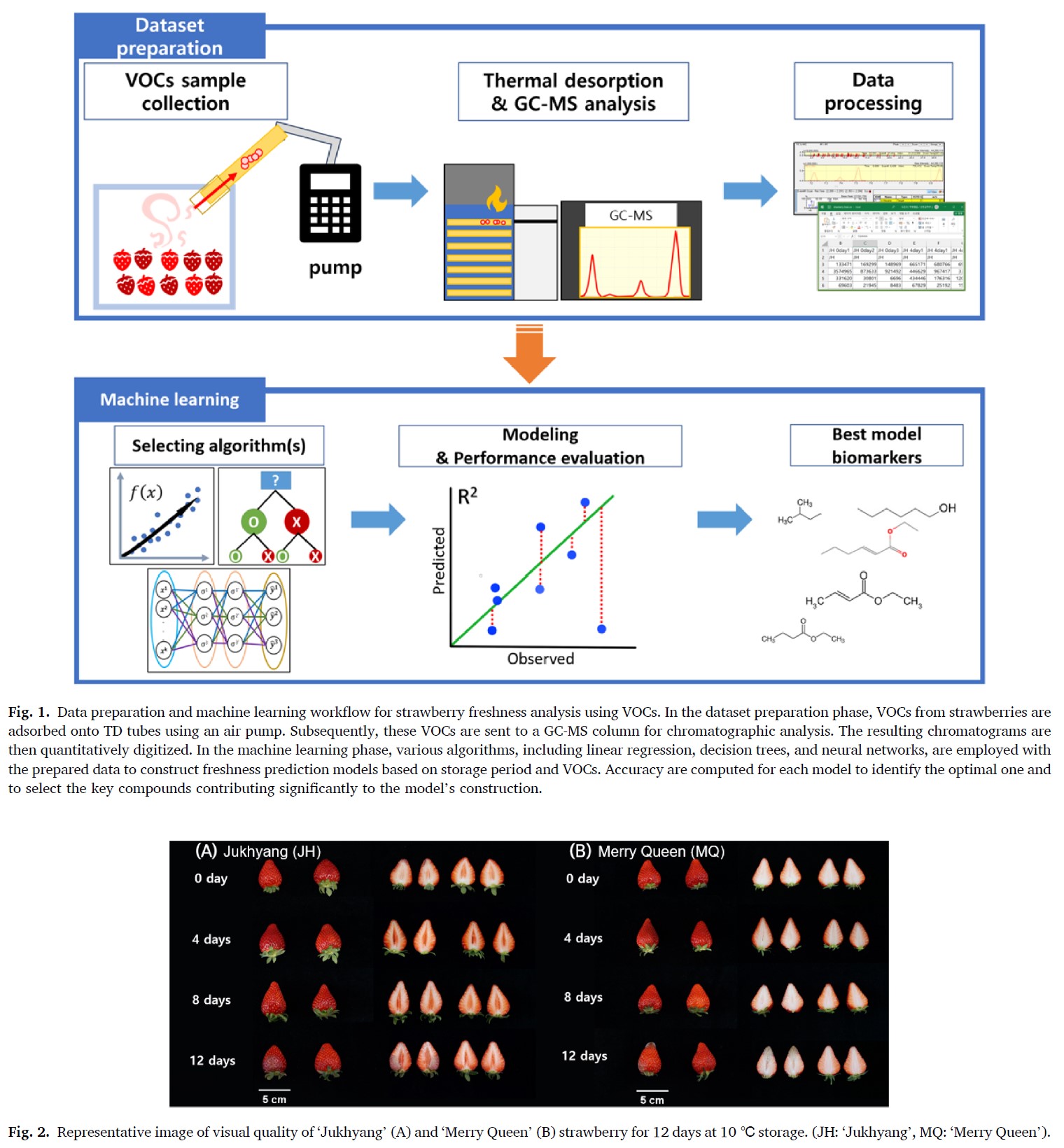
The study below used machine learning to predict the freshness of two strawberry cultivars based on their volatile aroma compounds during storage.
-
E Do, M Kim, DY Ko, M Lee, C Lee, K-M Ku. Machine learning for storage duration based on volatile organic compounds emitted from 'Jukhyang' and 'Merry Queen' strawberries during post-harvest storage. 2024. Postharvest Biology and Technology 211, 112808.
The oriental melon is one of Korea's six major fruit and vegetable crops, but it is a unique crop in that almost all of its production and consumption occurs in Korea. The 'melon rib' section of the fruit is particularly susceptible to browning, which leads to quality degradation. A recent collaborative study between our lab and Dr. Mi-Hee Park's team at the National Institute of Horticultural and Herbal Science found that the cuticle layer on the melon ribs is significantly thinner than on the yellow peel, making it more vulnerable to water loss and subsequent browning. Following this, we published research on the browning inhibition effects of hot water treatment and the underlying mechanisms through CA maritime export in Postharvest Biology and Technology, a top-tier journal in the field. We are also actively conducting research on the physiological changes of oriental melons during storage.
The study below addressed post-harvest problems in oriental melons by using hot water treatment to reduce browning.
-
M-H Park, DY Ko, KR Do, H-W Moon, KM Ku.
-

-
Hot water treatment alleviates peel browning in oriental melons through cutin biosynthesis: a comprehensive metabolomics approach, Postharvest Biology and Technology, 2023, 204, 112451.

Enhancing Functional Compounds in Fruits and Vegetables Using Cultivation Environments and Elicitors (Glucosinolate)
This is a core research topic in our lab that has been ongoing since 2009. We have been collecting data on the effects of methyl jasmonate (a plant hormone that regulates the production of defensive compounds after pest damage) treatment on enhancing glucosinolates, which are functional compounds in brassica vegetables (broccoli, cabbage, radish), and on related biosynthetic genes. We have confirmed a significant increase in indole glucosinolates and other glucosinolates after methyl jasmonate treatment, which mimics pest damage. We are continuously researching how these substances affect taste and health functionality.
Currently, we are building a database of glucosinolate degradation products in brassica vegetables through a National Research Foundation of Korea project (2021.3 - 2026.2). This will allow other researchers to easily identify and use glucosinolate degradation products via GC-MS (gas chromatography-mass spectrometry). We are also studying the biosynthesis of glucosinolates and their degradation products in various environmental and stress conditions. This research will not only improve the quality of brassica vegetables but also serve as foundational data for the kimchi industry, which uses them as a primary ingredient.

The study above confirmed that methyl jasmonate treatment at a concentration of 250 µM and pest damage of about 10% show similar metabolic patterns in kale. However, the sudden treatment with methyl jasmonate leads to a rapid increase in defensive compounds and a corresponding consumption of sugars. This shows that while pest damage increases the functional compound glucosinolate in brassica vegetables, it also increases bitterness due to a decrease in sugars. Our lab identified glucosinolate degradation products closely related to consumer preference in broccoli and published a study proving the correlation between consumer preference and glucosinolate hydrolysis products in Food Chemistry (Chiu et al., 2019).
Improving the Taste, Aroma, and Sensory Quality of Crops
Research on the aroma compounds of commonly consumed fruits and vegetables in Korea, such as strawberries, oriental melons, peaches, and other vegetables, is insufficient. Specifically, there is a lack of research on aroma by cultivar and changes in aroma under stress or during storage. The absence of industrially significant information on which aromas correlate with consumer preference makes it difficult to cultivate or breed agricultural products that can increase consumer satisfaction.
Our lab plans to select key quality factors of fruits and vegetables, such as taste, aroma, and appearance, using a metabolomic approach. We will investigate how sensory quality changes by cultivation method, cultivar, and storage method. We plan to expand our research to include collecting and utilizing foundational data needed for non-destructive quality measurement/discrimination and the operation of smart storage facilities.

The study above demonstrated that cultivating broccoli under solar panels, a new cropping system called agrivoltaics, helps maintain the green color of the broccoli, thereby enhancing consumer preference. It also contributes to farm income through additional electricity generation.
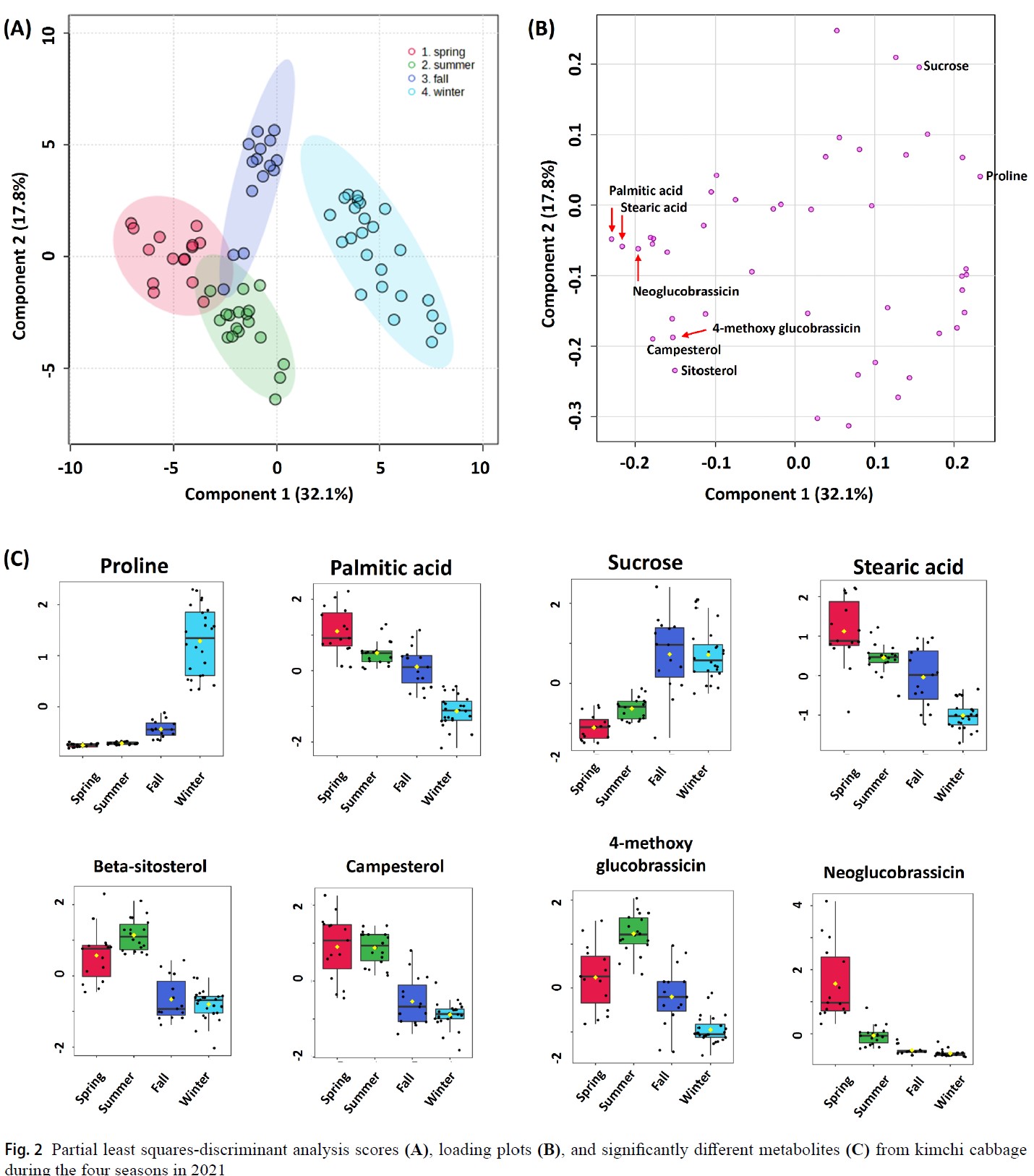
Cabbage is the main ingredient in kimchi, and the average per capita consumption of kimchi by Korean adults is about 35 kg per year. To meet this demand, cabbage is grown year-round. However, although consumers expect a consistent taste, the taste of cabbage varies with the seasons due to different growing environments. We were the first to profile the key differences in cabbages grown in each season through metabolic analysis.
-
SH Chae, SG Min, HW Moon, YB Jung, SH Park, HY Seo, K-M Ku. Kimchi cabbage (Brassica rapa subsp. pekinensis [Lour.]) Metabolic changes during growing seasons in the Republic of Korea. 2024, Horticulture, Environment, and Biotechnology.
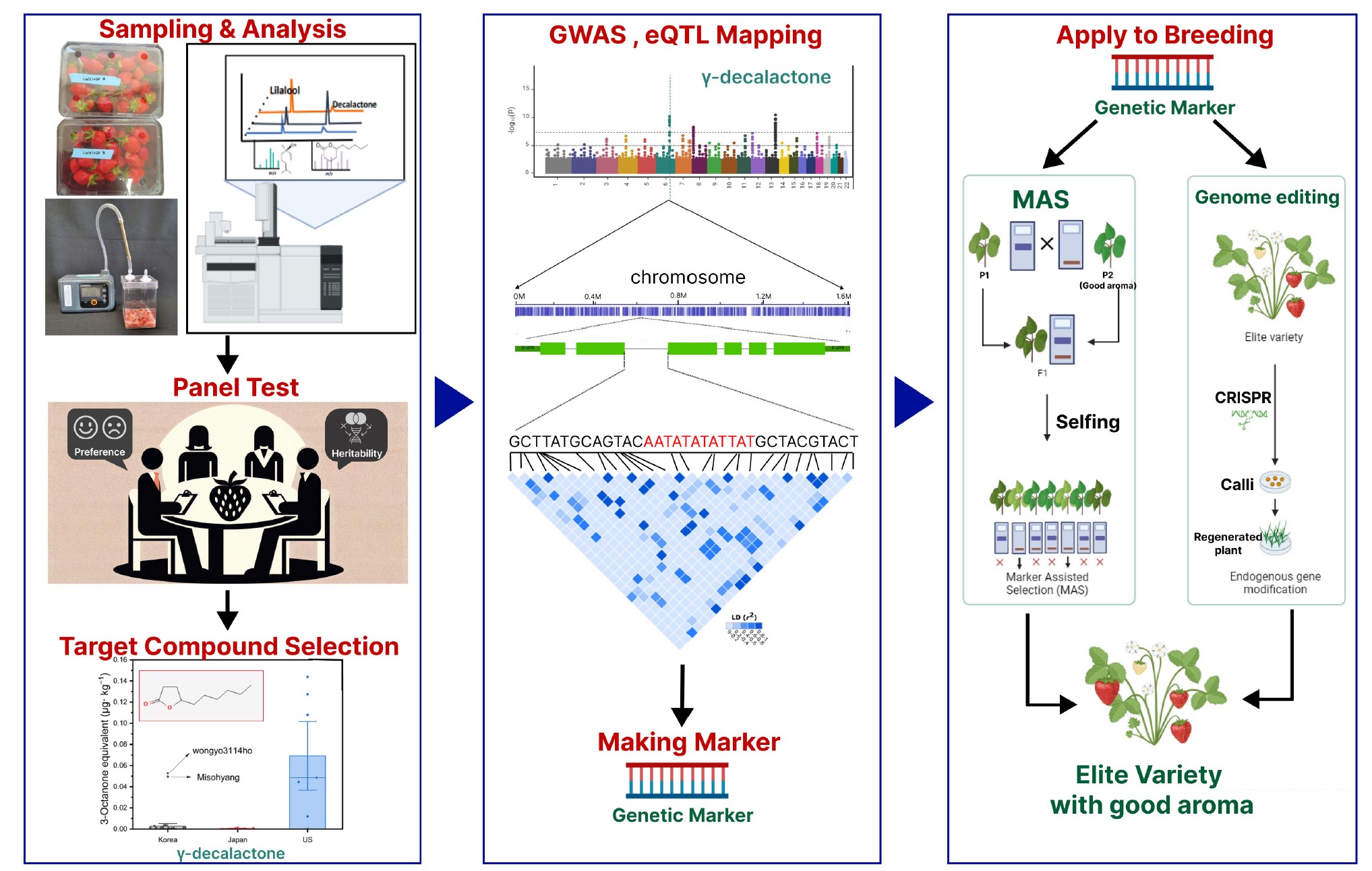
Strawberries hold the largest market share among single vegetable crops in Korea, with a market size of approximately 1.3 trillion KRW. Although various strawberry cultivars have been bred in Korea, there is still insufficient information on their aroma profiles and quality/metabolomic data for breeding export-promising cultivars. In particular, research on strawberry aroma, a crucial quality factor, is lacking. It is urgent to accumulate data on the aroma compounds of strawberries based on cultivar, storage method, and cultivation method.
To address this, we have analyzed the aroma compounds of strawberries as foundational data for a consumer-oriented breeding system. We have also built a GC-MS spectrum library by registering these compounds in a user library, making them easy to find and evaluate. This allows for the rapid assessment of volatile organic compounds (VOCs) in strawberries and provides data that can be used for future strawberry breeding.
The study below is a diagram proposing a strategy to improve strawberry quality through the screening of aroma compounds.
-
E Jee, E Do, CS Gil, S Kim, SY Lee, S lee, K-M Ku. Analysis of volatile organic compounds in Korean-bred strawberries: insights for improving fruit flavor. 2024, Frontiers in Plant Sciences, 10.3389/fpls.2024.1360050.
-
Teaching
[학부강의]
- 채소 및 허브학 LIBT354, Olericulture and Herbs
- 작물수확후관리학및실험 LIBT454, Postharvest Management of Horticultural Crops and Experiment
- [대학원강의]
- 채소원예특론 PBP513, Advanced Vegetable Sciences
- 수확후관리론 PBP514, Advanced Postharvest Management of Horticultural Crops
- 허브생산론 PBP608, Herb Production
- 작물품질평가특론 PBP616
- 식물대사체생리학특론 PBP618
[특수대학원]
- 채소학특론 JDI512
- 허브및아로마테라피특론 JDI617
- 식물생산기술공학 JDI518
- 수확후생리학 JDI512
[커리큘럼 개발]
- Demonstration of allelopathy of horseradish root extract on lettuce seed (Journal cover)
- Demonstrating the Effect of Surfactant on Water Retention of Waxy Leaf Surfaces (Journal cover)
- 스마트폰 애플리케이션을 활용한 왁스질의 식물잎표면에서의 계면활성제의 역할과 접촉각 측정을 교육하는 실험 교안 개발과 교육효과 분석
- 접촉각측정 실험 데모
- 실험수업 소개 및 운영 (교수자)
[실험프로토콜]
[ImageJ KIRD 초청 특강]
- 대학원생이 알아야 할 이미지 프로세싱 1 Adding scale bar
- 대학원생이 알아야 할 이미지 프로세싱 2 Area measurement
- 대학원생이 알아야 할 이미지 프로세싱 3 Quantification of gel intensity
- 대학원생이 알아야 할 이미지 프로세싱 4 Particle analysis
- KIRD_알파캠퍼스 녹화본 링크
- https://alpha-campus.kr/explore/e0d6bf50-652b-4acb-b35d-83a57b837736
Crop Quality Physiology Lab
[Current Lab Members]
2026년 2학기 대학원 입학 예정자: 석박사/박사 과정만 입학가능
2026년 1학기 대학원 입학 예정자: 이혜지 (석사), 강인구 (석박사)
[식물생명공학과 일반대학원]
-고태영 (석박사 6학기)
글루코시놀레이트 가수분해 시스템; 참외 큐틴/큐티클; 향기 분석
-조주빈 (석박사 8학기)
배추 내건성 관련 대사체 분석; 내건성 기작
-노유한 (박사 2학기)
배추 수확후저장 품질; 버섯 수확후저장 품질
-강채민 (박사 1학기)
신품종 포도의 숙기별, 저장환경별 대사체 분석
-이상훈 (석박사 1학기)
저장환경, 병원균에 따른 막인지질 및 품질 변화
-박종인 (석사 2학기)
참외 CA/MA 저장중 품질 변화
-이슬기 (석사 1학기)
무 내서성 관련 대사체 분석
-장유진 (석사 4학기)- 26.2 졸업예정자
무 식미/글루코시놀레이트 분석; 무 내서성 관련 식미
-Eloise Parent (석사 4학기)-26.2 졸업예정자
버섯 MA 포장실험; 수확후저장 품질
-지은구 (박사 1학기) 학연과정 -국립원예특작과학원-
-홍영진 (박사 3학기) 파트타임 -(주) 대동-
[생명환경과학대학원 원예생명공학-특수대학원]
최재희, 박고운, 김보경, 허다정
학부인턴
1) 2022/Fall (10/1-12/31) 연구실_인턴프로그램: Eloise Parent; 조영서; 조연서
2) 2023/겨울방학 생명과학대학 학부인턴 프로그램: 성준
2023/겨울방학 연구실_인턴프로그램: 마채준 (전남대); 이채림; Eloise Parent
3) 2023/여름방학 생명과학대학 학부인턴 프로그램: 권규혁, 김현재
2023/여름방학 연구실_인턴프로그램: 조연서; Eloise Parent
3) 2023/겨울방학 생명과학대학 학부인턴 프로그램: 원도경
2023/겨울방학 연구실_인턴프로그램: 박수빈, 정가빈
4) 2024/가을학기 연구실_인턴: 안도연
5) 2024 /겨울방학 인턴 연구프로그램:김민재, 김은빈, 김은진, 선재희, 이도윤, 이상훈,
이후연, 김경민(아주대), 김민선 (전남대)
[Alumni]
지은구 (석사, 고려대학교 생명과학대학원, 식물생명공학과) 2025.3
주우철 (석사, 고려대학교 생명과학대학원, 식물생명공학과) 2025.3
백지연 (석사, 고려대학교 생명환경과학대학원, 원예생명공학과) 2024.9
Moo Jung Kim (Postdoc in West Virginia University, 2015-2018), Senior Researcher at Givaudan
Yu-Chun Chiu (PhD in West Virginia University, 2015-2019), Labcorp Drug Deveopment
Tyler Simpson (MS in West Virginia University, 2017-2019)
SeungHun Chae (MS in Chonnam National University, 2020-2022) PhD in Chonnam National University
HyungWoo Moon (Ms in Chonnam National University, 2020-2022) PlantyFarm
[Lab Instruments]
Shimadzu GC-MS with TD100-xr
Waters ARC LC-MS (PDA, QDA detectors)
Agilent HPLC 1100 series MWD


[전공관련진로]
정부출연 연구소 (KIST 강릉분원, 세계김치연구소 등)
기업 연구소 (KT&G, 아모레퍼시픽, CJ, 대상, 풀무원 등)
국립원예특작과학원 (채소과, 저장유통과), 농업과학원 (농업유전자원센터) 및 공무원
대학교 교수 및 직원